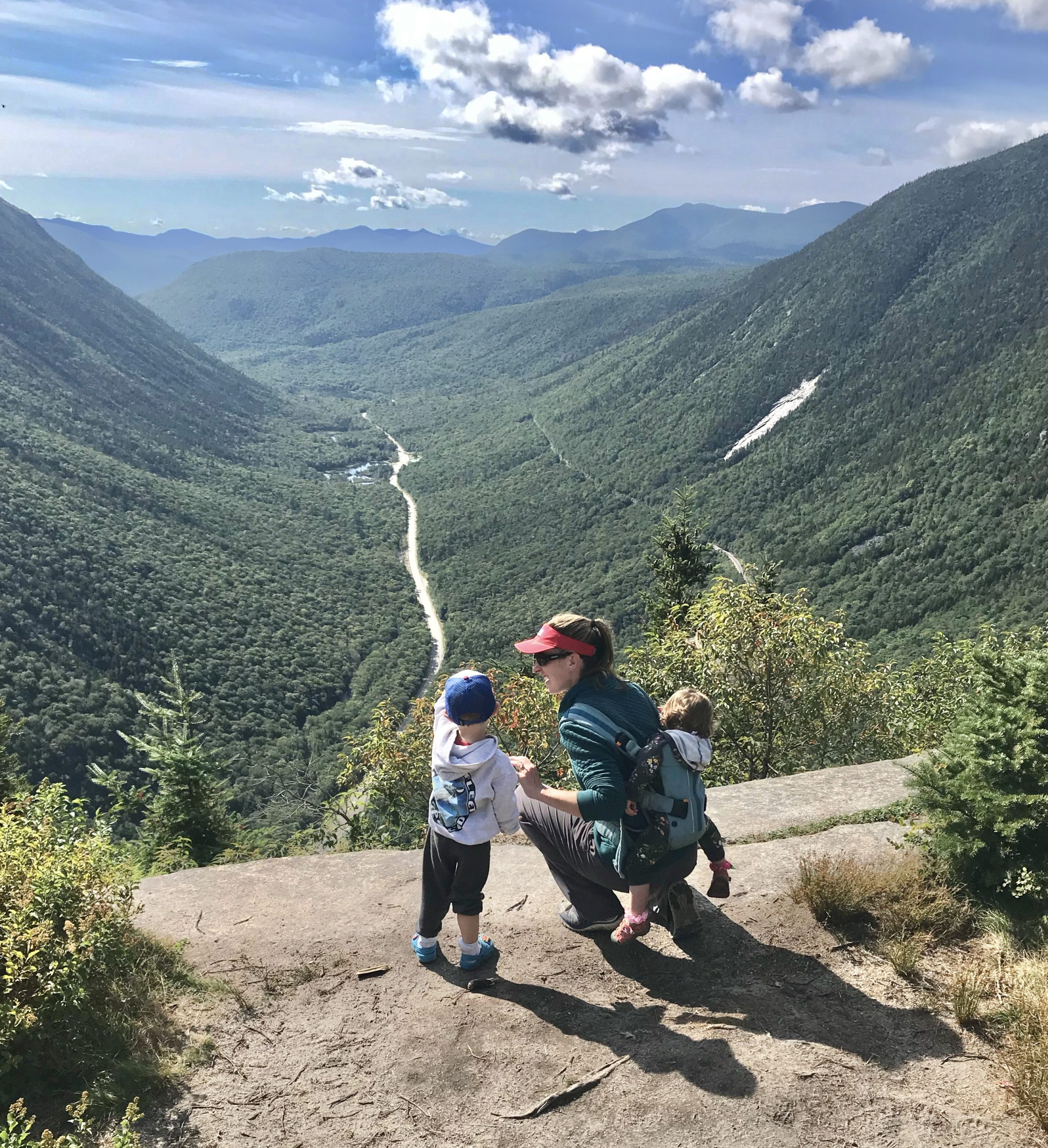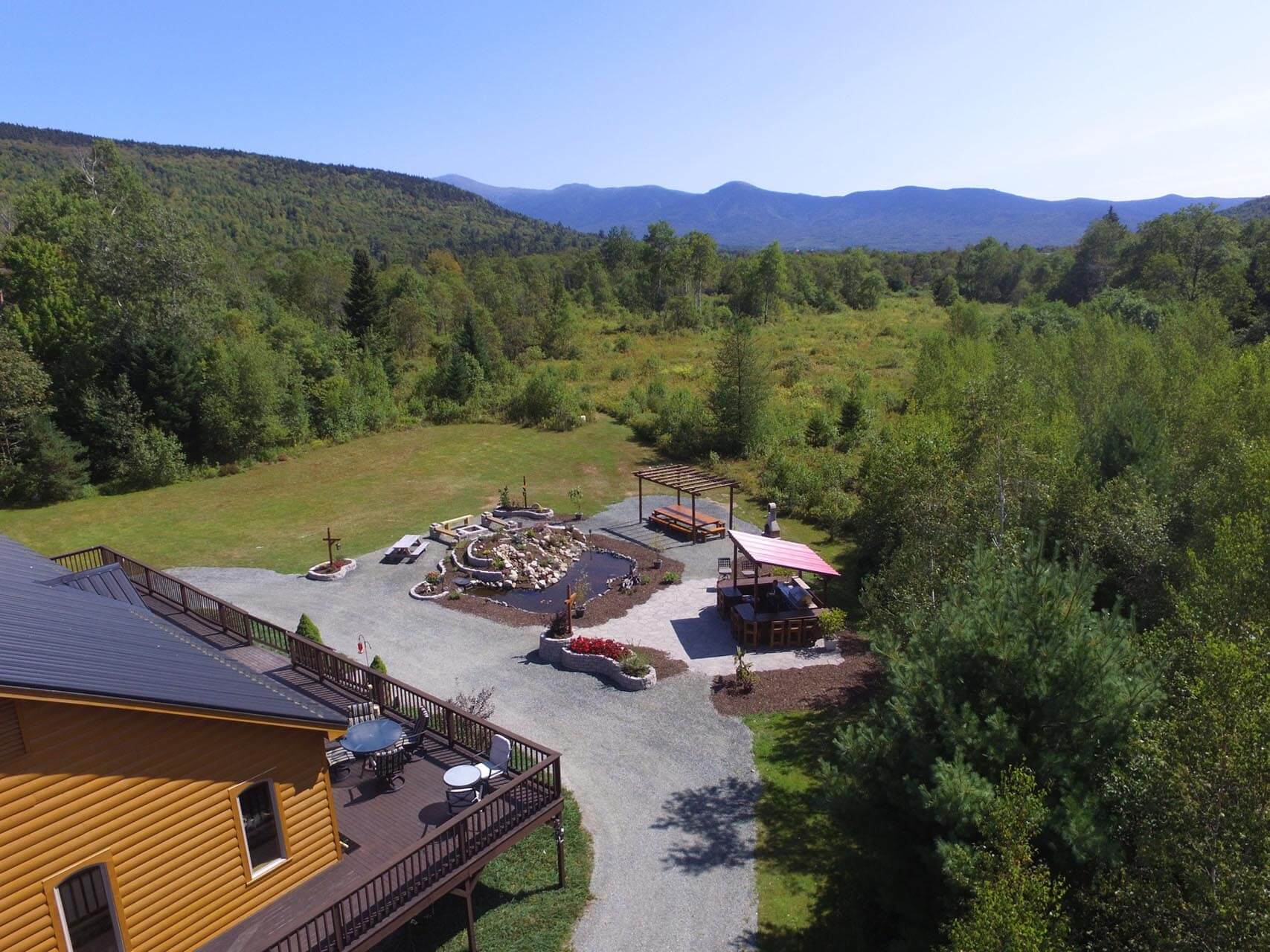

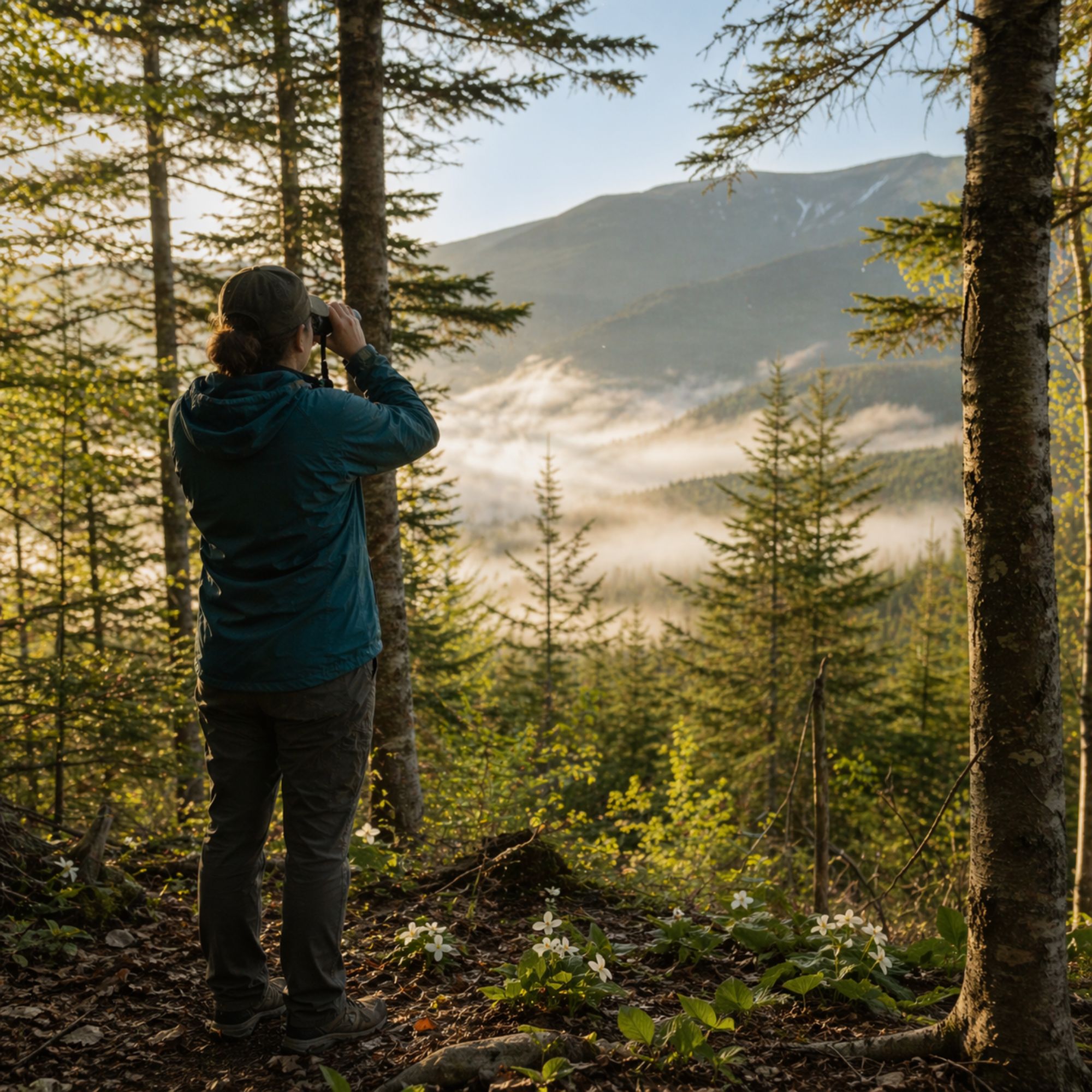
Few experiences in New England birding match a May morning in the White Mountains. The valley trails are alive with warbler song before the sun clears the ridge, the spruce forests at elevation hold species found nowhere else in the region, and the whole thing is accessible from a vacation rental porch with a cup of coffee and a pair of binoculars.
The White Mountains’ elevation range is the key. From valley floors near 1,000 feet to Mount Washington’s summit at 6,288 feet, the region stacks habitats that simply don’t exist at this variety anywhere else in the Northeast. In a single morning, you can move through mixed hardwood forest, spruce-fir boreal zones, and open alpine tundra, each carrying its own distinct bird community.
May sits squarely at the peak of spring migration in New Hampshire. Migration builds from late February through April, then concentrates hard between mid-April and the end of May. That six-week window is when warbler diversity peaks, when the high-elevation specialists like Bicknell’s Thrush arrive to their breeding grounds, and when every hike becomes a birding opportunity whether you planned it that way or not.
Guests staying at a vacation rental in Bretton Woods, Twin Mountain, or Franconia are in an ideal position. You don’t need specialized gear to get started, though binoculars and a bird ID app will improve the experience considerably. You don’t need to summit anything. The region’s road network, valley trails, and short nature paths put a remarkable range of species within easy reach.
WHY SPRING IS THE BEST SEASON FOR BIRDING IN THE WHITE MOUNTAINS
The case for spring birding in the White Mountains comes down to timing, visibility, and concentration.
Timing: The peak migration window in New Hampshire runs from mid-April to the end of May, according to the NH Audubon Society. During this period, birds that wintered south of the United States travel through on their way to northern breeding grounds. The White Mountains sit along the Atlantic Flyway, one of the major North American migration corridors, and that position brings a continuous stream of species through the region for weeks.
Visibility: Early spring, before the leaves fully emerge, offers the clearest sightlines into the forest canopy. By late May the canopy fills in, but breeding season puts birds into full song and display mode, making them much easier to locate by sound even when you can’t see through the foliage. Learning to track birds by their calls rather than just by sight dramatically increases what you find.
Concentration: The White Mountains’ range of elevation creates what birders call a vertical migration effect. Species that breed at different elevations arrive at staggered times, which stretches the productive birding window across the full month of May. Lower elevation habitats peak first in April. By mid-to-late May, the high spruce forests are filling with boreal species. That layered timing keeps excellent birding available throughout the season.
Spring bird migration in the White Mountains peaks from mid-April to the end of May. Over 200 species have been recorded in the region. The Bicknell’s Thrush, one of the most sought-after birds in the Northeast, arrives to its spruce-fir breeding habitat above 3,000 feet in late May and early June. Key locations include Franconia Notch State Park, Pondicherry Wildlife Refuge, Crawford Notch, and the Mount Washington Auto Road corridor.
TOP SPRING BIRDING LOCATIONS NEAR BRETTON WOODS
Franconia Notch State Park
Franconia Notch State Park is one of the most accessible birding destinations in the White Mountains, and the range of habitats packed into the notch makes it productive for a wide variety of species. Profile Lake at the base of Cannon Mountain draws waterfowl, including common mergansers and wood ducks. The rocky cliffs along the notch walls host nesting peregrine falcons. The Franconia Notch Recreation Path, a paved trail running through the valley floor, is a reliable spot for warblers, flycatchers, and thrushes in the mixed forest edges alongside the path.
At Cannon Mountain, the aerial tramway to the summit puts you in range of boreal species including Boreal Chickadee, Gray Jay, and potentially Bicknell’s Thrush at the right elevations. Echo Lake at the tramway base provides open water where waterfowl gather in May.
Pondicherry Wildlife Refuge
Pondicherry Wildlife Refuge, located just outside Whitefield and accessible from the Twin Mountain area, is widely regarded as one of the top birding sites in all of New Hampshire. The refuge covers over 6,000 acres, protecting a mix of wetlands, boreal forest, and beaver ponds with a sweeping view toward the Presidential Range. Regular species here include common loon, osprey, bald eagle, American bittern, and a broad variety of warblers and songbirds. Birders have documented well over 200 species on the property, and May is an exceptional time to visit as nesting and migration overlap.
The refuge is a short drive from vacation rentals in the Twin Mountain and Bretton Woods area, making it a natural morning birding destination before hiking, sightseeing, or simply relaxing back at the property.
Crawford Notch State Park
Crawford Notch has a different character than Franconia, with a longer, narrower valley flanked by steep forested walls and wetlands along the Saco River. The wetland edges along the valley floor attract great blue herons and a variety of waterfowl. The mature mixed forests along the lower trail network are productive for warblers and vireos in May. The Elephant Head and Ripley Falls trail areas give access to mid-elevation habitats where the species mix shifts toward the boreal.
For guests already planning to explore the waterfalls in Crawford Notch, birding layers naturally onto the hike with almost no extra effort. The spring waterfalls guide for Bretton Woods covers the best waterfall hikes in the area, and those same trails pass through prime warbler and thrush habitat.
The Bretton Woods and Twin Mountain Valley
The meadows, wetlands, and forest edges of the Twin Mountain and Bretton Woods valley floor are productive birding territory without any serious hiking required. Early morning drives along Route 302 between Twin Mountain and Crawford Notch regularly turn up a variety of species in the roadside vegetation, wetland edges, and mixed forest patches. Red-winged blackbirds, various swallow species, and early warblers are commonly visible from the road.
The grounds around the Omni Mount Washington Resort and the surrounding fields also provide open habitat and forest edges that attract songbirds, particularly in the first hours after sunrise.
The Mount Washington Auto Road Corridor
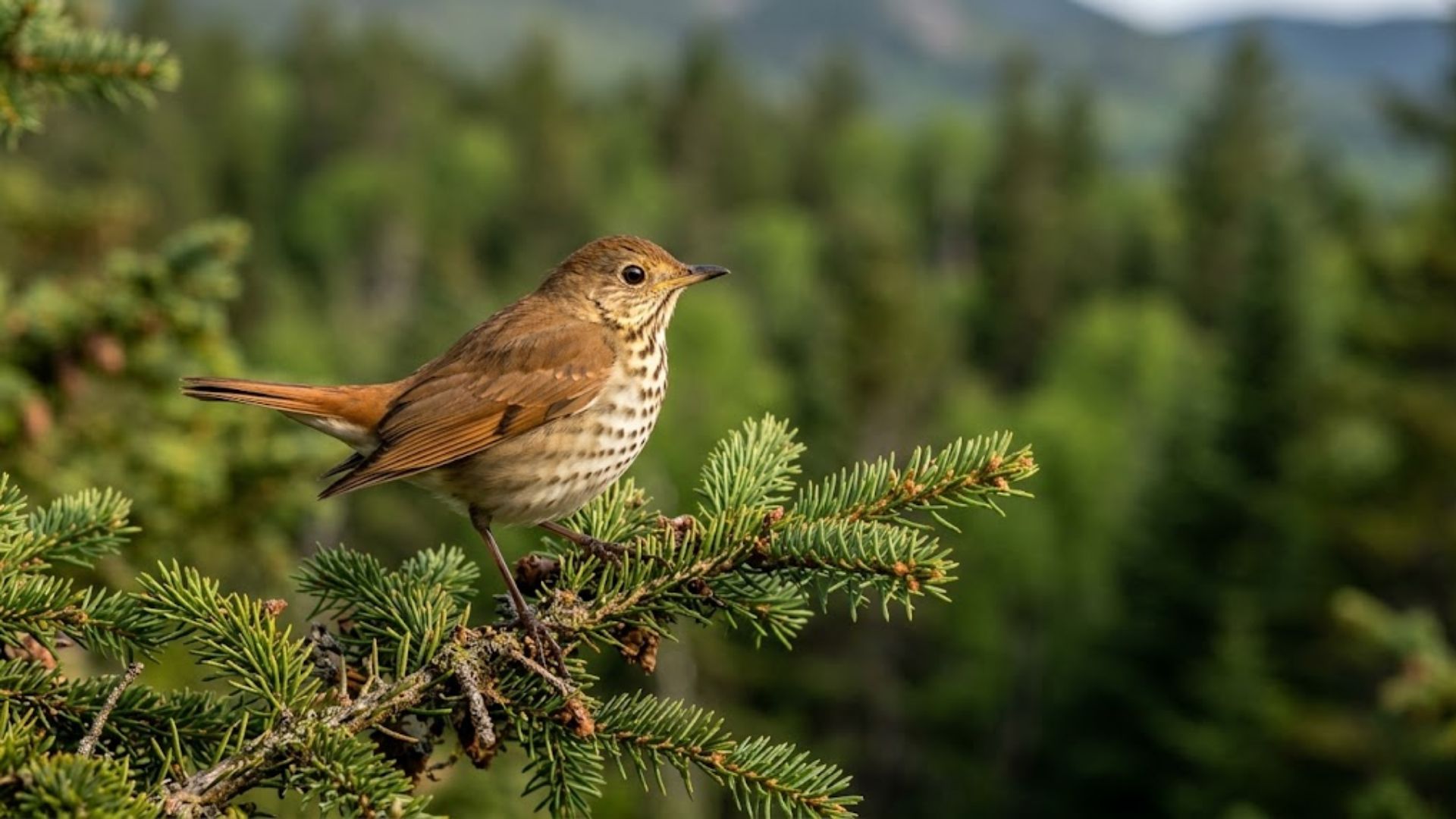
For birders specifically targeting Bicknell’s Thrush, the Mount Washington Auto Road provides the most reliable access to the high-elevation spruce-fir habitat where this species breeds. The Bicknell’s Thrush is one of the most sought-after birds in northeastern birding, nesting in a narrow zone above roughly 3,000 feet on the upper slopes of the highest White Mountains peaks. Late May and early June mark the species’ arrival to its breeding grounds.
The Mount Washington Auto Road provides some of the most accessible routes into Bicknell’s Thrush habitat above 3,000 feet. Contact them directly at mtwashingtonautoroad.com for current seasonal offerings and road conditions before planning your visit.
TARGET SPECIES FOR MAY BIRDING IN THE WHITE MOUNTAINS
Knowing which species to expect helps you use your time well and set realistic expectations for different habitats. Here’s a breakdown by habitat type.
High-Elevation Spruce-Fir Forest (above 3,000 feet)
The boreal species that draw serious birders to the White Mountains concentrate in the spruce-fir zone beginning around 2,500 to 3,000 feet and extending to the treeline. In May, this habitat comes alive as breeding birds arrive on schedule.
Species to look for:
- Bicknell’s Thrush (highly sought after; arrives late May to early June above 3,000 feet)
- Spruce Grouse (secretive but resident year-round; best found by slow, careful walking in dense spruce)
- Black-backed Woodpecker (rare and quiet; listen for tapping in dead spruce snags)
- Boreal Chickadee (present year-round; more vocal and easier to find during breeding season)
- Gray Jay (bold and curious; often approachable; known locally as the “camp robber”)
- Yellow-bellied Flycatcher and other boreal flycatchers
Mixed Forest Valleys (1,000 to 2,500 feet)
The mid-elevation mixed hardwood and softwood forests covering most of the White Mountains’ valleys serve as the main migration corridor for warblers and other neotropical migrants. May is the peak month for warbler diversity, and the variety on a good morning can be genuinely impressive.
Species to look for:
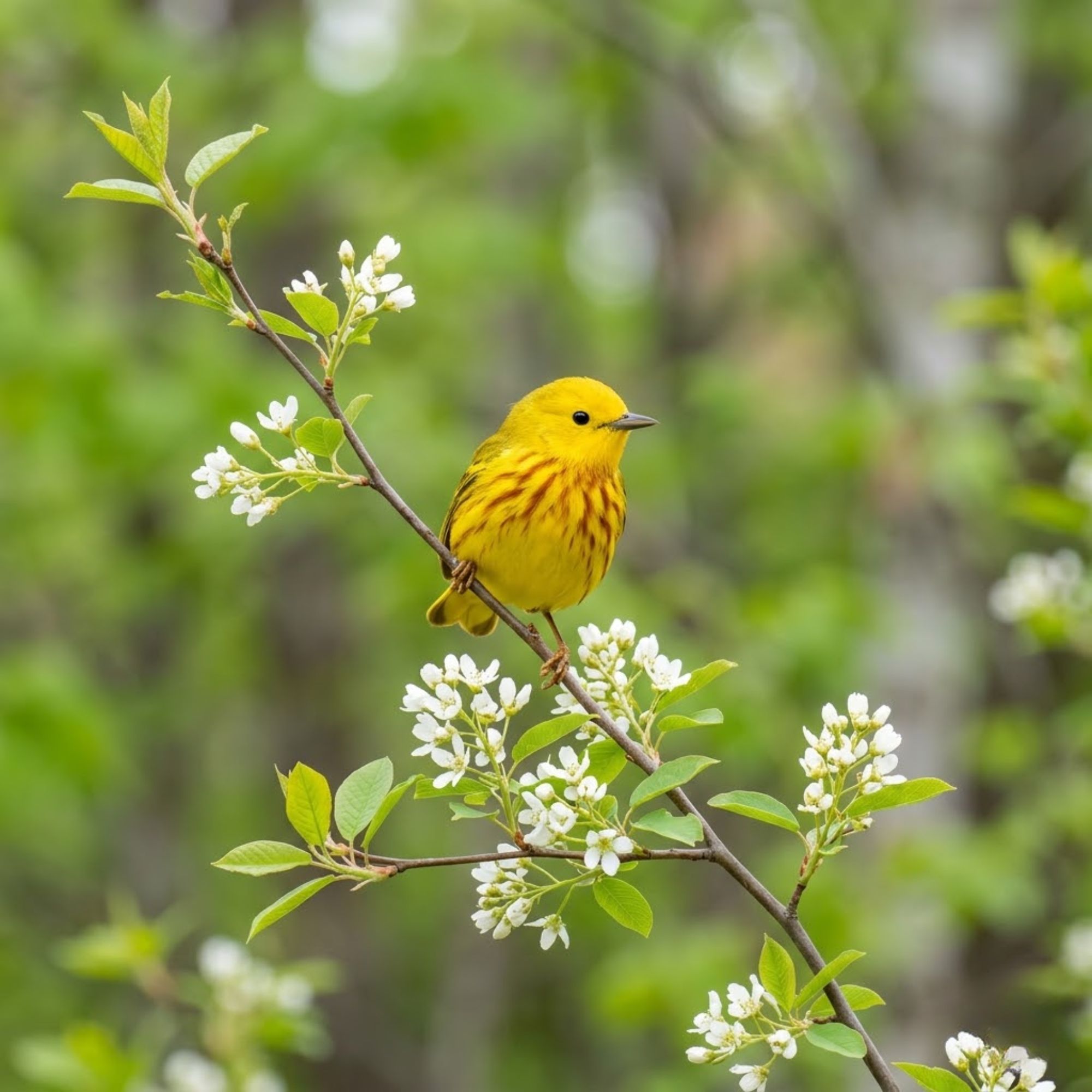
- Rose-breasted Grosbeak (striking black, white, and red male; a reliable May arrival)
- Cape May Warbler (tiger-striped; passes through in May heading north)
- Blackburnian Warbler (fiery orange throat; nests in the White Mountains spruce forests)
- American Redstart (active and conspicuous; common in the valley forests)
- Northern Parula (small but distinctive; associated with spruce and hemlock near water)
- Black-throated Green Warbler (common breeder in mixed forests)
- Ovenbird (ground-nesting warbler; easily heard by its loud “teacher, teacher” call)
- Red-eyed Vireo (abundant in the canopy by late May)
Wetlands and Open Water
Profile Lake, Echo Lake, the Saco River corridor, the beaver ponds at Pondicherry, and the wetland edges along Route 302 attract a different set of species entirely:
- Common Loon (listen for the yodeling call on lakes in late May as nesting begins)
- Common Merganser (regularly seen on rivers and lakes)
- Great Blue Heron (often standing still at shallow water edges)
- Osprey (active over the larger water bodies in May)
- Bald Eagle (present in the region year-round; more visible over open water)
- American Bittern (secretive marsh bird; more often heard than seen)
PRACTICAL TIPS FOR BIRDING IN THE WHITE MOUNTAINS
Start early. Bird activity peaks in the two hours around sunrise. Being at your location by 6:00 or 6:30 AM on a clear May morning produces dramatically more sightings than a midday visit to the same spot. Late afternoon from around 4:00 to 7:00 PM is a worthwhile secondary window if early rising isn’t your thing.
Use sound as your primary guide. The forests here are dense, and most birds are heard well before they’re seen. Download the Cornell Lab of Ornithology’s Merlin Bird ID app before your trip. It includes a sound identification tool that works even with limited cell signal. The eBird app from the same organization shows real-time sightings reported by other birders in whatever area you’re visiting.
Dress for mountain mornings. May mornings in the mountains are cool, often in the 40s at valley elevations and colder with elevation gain. Layers and a windproof shell are essential. Insect repellent for black flies is strongly recommended throughout May.
Move quietly and slowly. Fast walking flushes birds before you see them. Stopping for a few minutes at a forest edge or wetland margin is consistently more productive than covering ground quickly. The best birding here rewards patience.
Binoculars are worth it. An 8×42 or 10×42 pair is the single most useful tool for forest birding in the White Mountains. Many birders also carry a spotting scope for scanning open areas, but a solid pair of binoculars is genuinely sufficient for most of what you’ll encounter.
The best times for birding in the White Mountains are from 30 minutes before sunrise through about two hours after, then again from late afternoon to dusk. May offers the highest species diversity of any month, with migrating warblers peaking in mid-to-late May and high-elevation boreal species like Bicknell’s Thrush arriving to the upper spruce forests in late May and early June. Check eBird (ebird.org) for recent local sightings before your visit.
PAIRING BIRDING WITH OTHER WHITE MOUNTAINS ACTIVITIES
One of the most appealing things about spring birding in the White Mountains is how naturally it fits into a broader mountain escape. You don’t need to dedicate the whole trip to it.
A morning walk to any of the spring waterfalls near Crawford Notch or Franconia Notch passes directly through productive warbler habitat. The hike itself becomes the birding opportunity. Our spring hiking guide for Bretton Woods covers the trail options that also happen to be excellent birding routes.
For guests interested in White Mountains wildlife more broadly, our White Mountains wildlife guide covers everything from moose and white-tailed deer to black bear. Spring is a strong season for wildlife observation generally, and birding fits naturally into that context.
Guests on extended stays, particularly remote workers or families taking a longer spring break, often find that birding fills the early morning hours beautifully before the rest of the day opens up. Our White Mountains activities guide is a useful resource for planning a full itinerary around a multi-day or week-long stay.
SPRING BIRDING FAQ
When is the best time to go birding in the White Mountains?
Peak spring bird migration in the White Mountains runs from mid-April through the end of May. For warbler diversity in the valley forests, mid-to-late May is the sweet spot. For high-elevation boreal species like Bicknell’s Thrush, late May and early June are most productive. The first two hours after sunrise are consistently the most active time of day.
Do I need to be an experienced birder to enjoy spring birding in the White Mountains?
Not at all. Many visitors discover birding casually during a spring hike and find it adds a whole new dimension to the experience. Downloading the free Merlin Bird ID app from Cornell Lab before your trip is the single most useful preparation step. It includes sound identification that works with your phone’s microphone, which makes unfamiliar birdsongs easy to track down.
What birding equipment should I bring?
Binoculars are the most important tool. An 8×42 or 10×42 mid-range pair is more than sufficient. A smartphone with the Merlin and eBird apps handles sound identification and shows location-specific sighting lists. Dress for cool, potentially damp conditions; mornings in the mountains in May are often in the 40s.
Is Bicknell’s Thrush difficult to find in the White Mountains?
It takes some planning. The species nests above roughly 3,000 feet in dense spruce-fir forest, which isn’t accessible from most valley trails without a substantial hike. The most practical way to reach its habitat without a major summit climb is via the Cannon Mountain aerial tramway or the Mount Washington Auto Road. For current seasonal access options and road conditions, check mtwashingtonautoroad.com directly before planning your visit.
Are there guided birding tours in the White Mountains?
Guided birding options in the White Mountains range from organized group field trips to private naturalist guides. NH Audubon is a good starting point for organized trips in New Hampshire. Visit nhaudubon.org for current offerings, and search for local naturalist guides in the Mount Washington Valley area for more personalized experiences.
PLAN YOUR BIRDING TRIP AROUND A WHITE MOUNTAINS VACATION RENTAL
The White Mountains are genuinely one of the best spring birding destinations in the northeastern United States. The best locations are accessible without special permits, guides, or gear beyond a pair of binoculars and a phone.
For guests who want to combine memorable birding with a comfortable base, a vacation rental in Bretton Woods or Twin Mountain puts you within 15 to 30 minutes of Pondicherry Wildlife Refuge, Franconia Notch State Park, and Crawford Notch. That proximity means you can be out at first light for the morning’s best birding, then spend the rest of the day hiking, exploring the area’s dining and attractions, or simply unwinding at the property.
As your local White Mountains experts since 2017, we’re happy to share our favorite birding routes, recommend the best early morning trails, and help you plan a spring mountain escape that makes the most of the season. Browse available spring rentals in the White Mountains and find the right base for your birding adventure. Our local team is available 24/7 for questions about properties, availability, or trip planning.