
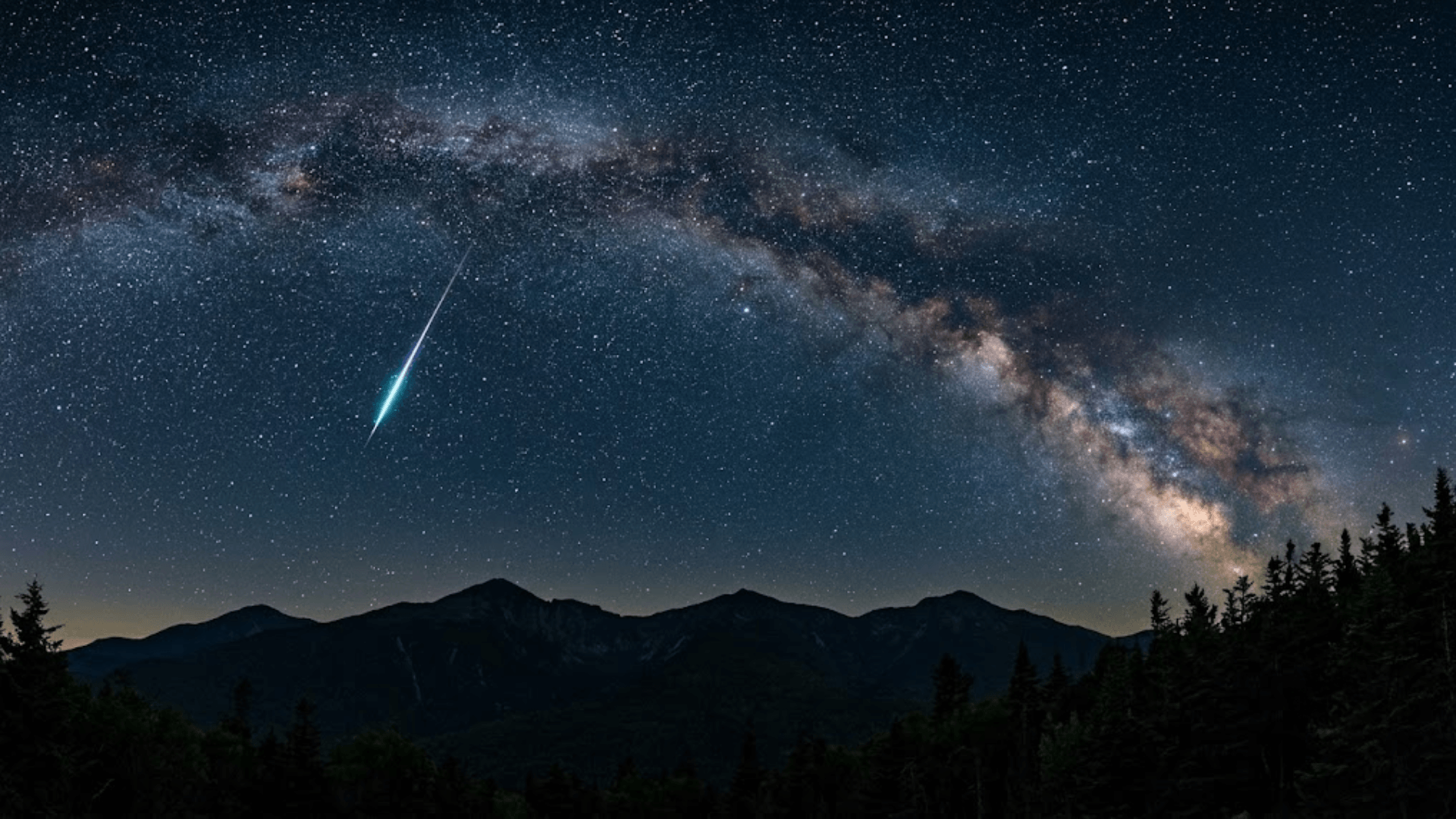
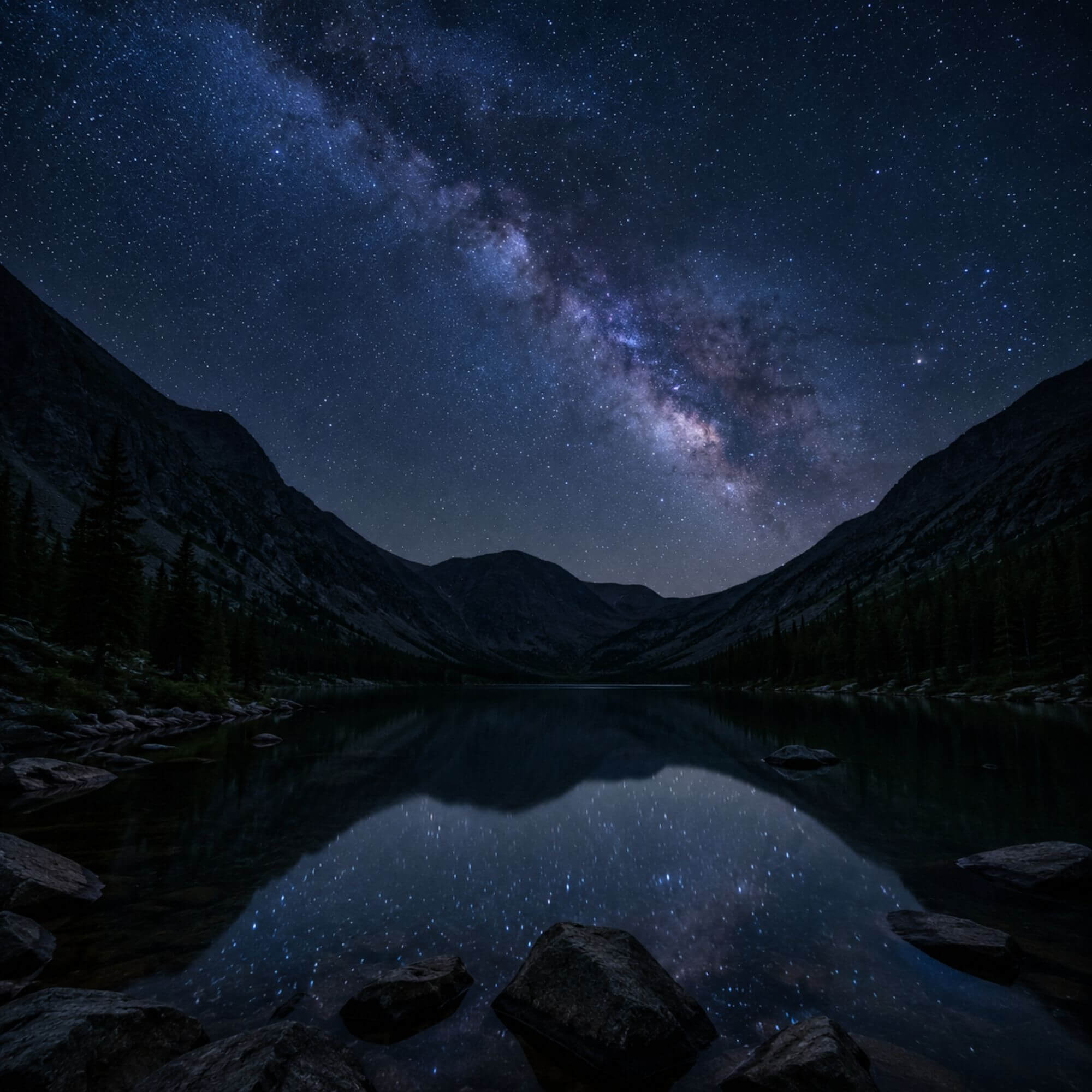
The White Mountains sit far enough from Boston and Manchester that the sky actually looks like a sky. On a clear August night, the Milky Way shows up as a real band of light overhead, not a rumor you half remember from childhood camping trips. This year gives stargazers an extra reason to stay up late: the Perseid meteor shower peaks August 12-13, 2026, and it lines up with a new moon, which means the darkest possible background for catching meteors streak by.
Most people never see a proper meteor shower, not because the showers aren’t happening, but because they’re trying to watch from somewhere with too much ambient light to see anything but the brightest handful. That’s the one advantage a White Mountains trip has built in already. You don’t have to seek out darkness on this trip. It’s just what’s outside the window.
If you’re staying in a White Mountains vacation home this August, here’s what to know about the Perseids, where to actually go to see them, and how to plan an evening around it without driving an hour each way.
WHEN TO WATCH THE PERSEIDS IN 2026
The Perseids are active from mid-July through late August, but the show gets dramatically better as it builds toward peak night. In 2026, that peak falls on the night of August 12 into the early morning of August 13. A new moon on peak night means no moonlight washing out the fainter meteors, which astronomers consider one of the best viewing setups a Perseid season can offer.
Under good conditions, in a genuinely dark sky, the American Meteor Society puts peak rates at 50 to 100 meteors per hour with no moon interfering (AMS, 2026), exactly the kind of sky the White Mountains offer. The best viewing window runs from around 11pm to just before dawn, when the shower’s radiant point (in the constellation Perseus) climbs higher in the sky. You don’t need a telescope. You don’t even need binoculars. You need a clear night, a spot without streetlights, and the patience to lie back and look up for twenty minutes before your eyes fully adjust to the dark.
WHAT’S ACTUALLY HAPPENING UP THERE
The Perseids show up every August because Earth passes through a trail of debris left behind by Comet Swift-Tuttle, a chunk of ice and rock that swings through the inner solar system roughly once every 133 years. The comet itself is long gone from view, last passing near Earth in 1992, but the dust and pebble-sized debris it shed on previous passes still hang in its orbit. Every summer, our planet plows through that debris field, and the particles burn up in the atmosphere at roughly 37 miles per second, creating the bright, fast streaks we call meteors.
The shower gets its name from the constellation Perseus, since the meteors appear to radiate outward from that part of the sky. You don’t need to find Perseus to enjoy the show, though. Meteors can appear anywhere overhead, so the best approach is simply to find the darkest, widest patch of open sky you can and let your peripheral vision do the work.
WHY THE WHITE MOUNTAINS ARE GENUINELY GOOD FOR THIS
This isn’t just marketing language about “peaceful mountain skies.” The White Mountain National Forest carries a Bortle Class 2 rating on the scale astronomers use to measure sky darkness, putting it among the darker skies within a day’s drive of Boston or New York. Most backyards in a mid-sized city rate a 7 or 8. A 2 means the Milky Way isn’t just visible, it’s obvious.
That’s the advantage of watching from Bretton Woods instead of trying to catch the same shower from a suburban driveway three hours south.
WHERE TO WATCH: SPOTS NEAR YOUR RENTAL
You don’t need to drive far. Some of the best dark-sky viewing in the region is a short trip from Twin Mountain, Bethlehem, and Franconia.
Crawford Notch, right next door. The stretch of Route 302 through Crawford Notch and Bretton Woods offers wide, open sky views framed by the Presidential Range, and it’s close enough that you can step outside your rental rather than plan a late-night drive. From most Twin Mountain or Bretton Woods area properties, you’re looking at a 10 to 15 minute drive, or in some cases a short walk. Pull-offs near Saco Lake give you a clear horizon and the mountains as a backdrop rather than a foreground, and the still water occasionally throws back a faint reflection of the sky on calm nights.
The AMC Highland Center. Located right in Crawford Notch, roughly 15 minutes from Twin Mountain, the Highland Center runs guided evening astronomy programs through the summer as part of a partnership with Carthage College’s astronomy outreach program, including telescope viewing when weather cooperates. Programs and schedules vary by week, so call ahead or check the AMC’s site for what’s running during your stay. It’s a good option if you want an expert pointing out what you’re looking at rather than navigating a star chart yourself.
Franconia Notch, Echo Lake and the Cannon Mountain base area. About 20 to 25 minutes from Twin Mountain, the parking areas near Echo Lake and the Cannon base offer wide horizons and low light pollution, with the added bonus of mountain reflections on the water on calm nights. This is also a reasonable stop if you’re already planning a day trip to Franconia Notch State Park and want to stay through sunset.
Further out: the Kancamagus Highway. If you’re up for a longer drive, the overlooks along the Kanc between Lincoln and Conway are a favorite for serious stargazers, with the Pemigewasset Overlook offering one of the most open sky views in the region. It’s roughly 40 minutes to an hour from most Bretton Woods area rentals, so it’s more of a dedicated outing than a quick after-dinner walk, but the payoff is a genuinely wide, unobstructed sky with almost no development in view.
CHOOSING A HOME BASE FOR STARGAZING
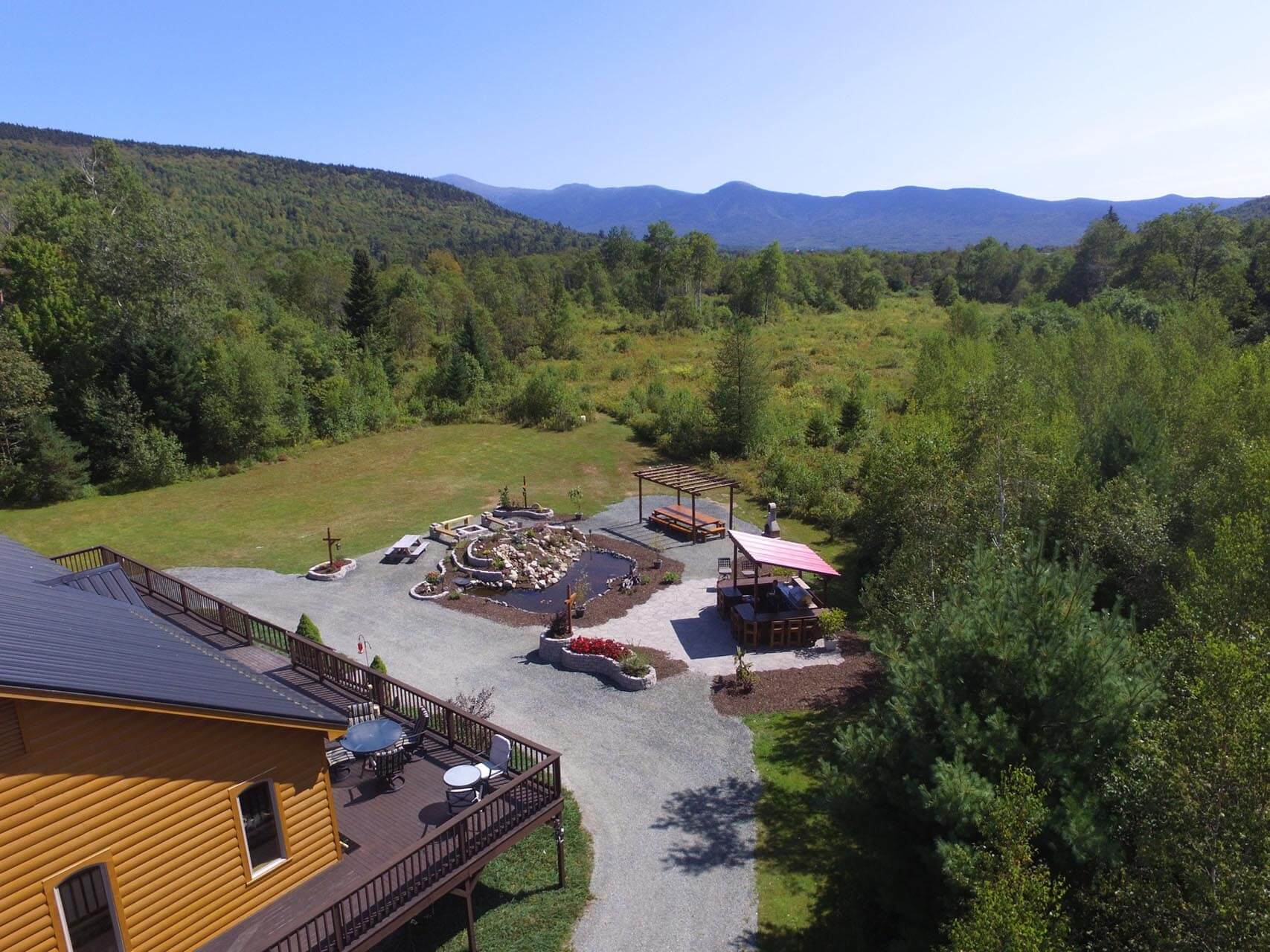
Where you stay changes how easy this is. A vacation home in Twin Mountain or Bretton Woods puts you closest to Crawford Notch and the Highland Center, both roughly 10 to 15 minutes out, which matters if you’d rather not commit to a long drive after a full day outdoors. A property in Franconia or Sugar Hill trades that proximity for quicker access to Echo Lake and Cannon Mountain instead, along with easier morning access to Franconia Notch State Park if you want to combine stargazing with hiking or the Flume Gorge the next day. A Bethlehem rental splits the difference reasonably well, with both Crawford Notch and Franconia Notch within a 20- to 25-minute drive.
None of this requires a secluded cabin with no neighbors for miles. Even the developed pockets of Twin Mountain and Bretton Woods sit well within the dark-sky zone, since the region as a whole has very little of the light pollution that washes out the sky in more populated parts of the state.
If you haven’t booked yet, it’s worth deciding on a stargazing home base before you lock in dates. Browse available vacation homes across these towns and filter by proximity to the notches so the drive after dinner stays short.
PHOTOGRAPHING THE PERSEIDS
Capturing meteors on a phone camera is genuinely difficult, since most phones need more light than a fast-moving streak provides in the fraction of a second it’s visible. If you want photos and not just memories, a few things help:
- A camera capable of manual settings and long exposures, even a basic mirrorless or DSLR, will outperform a phone by a wide margin.
- A sturdy tripod is non-negotiable. Any camera shake ruins a long exposure.
- Set a wide aperture, a high ISO, and an exposure of 10 to 20 seconds, then take repeated shots and hope one catches a streak. This is a numbers game more than a skill.
- Frame the shot with something on the horizon, a mountain ridge, a treeline, a lake, so the photo has scale and isn’t just a black square with a white line in it.
- If your phone has a dedicated night mode with a long exposure option, it can work in a pinch, but expect a lower hit rate than a proper camera.
STARGAZING WITH KIDS
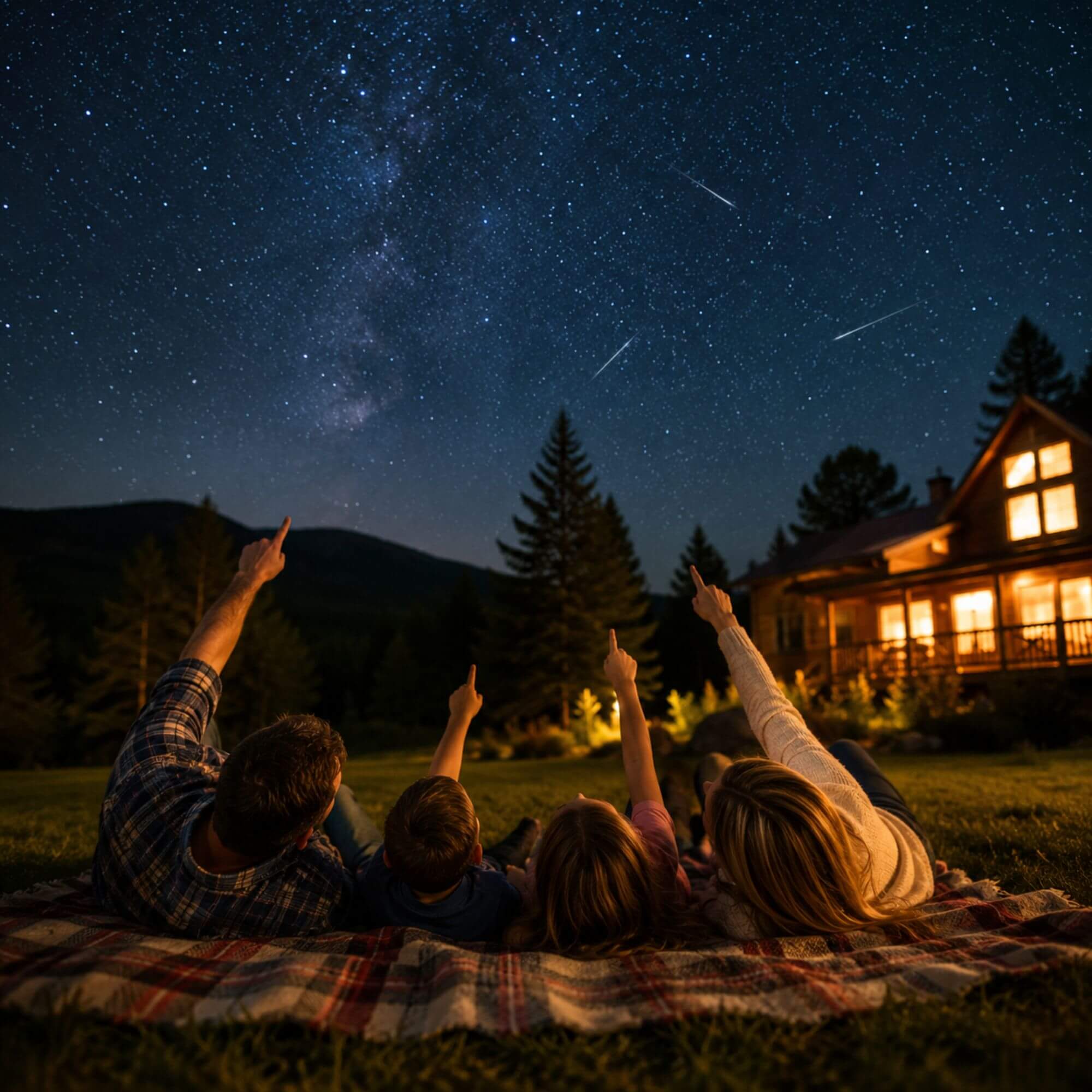
Meteor showers are one of the easier astronomy events to share with children, mostly because they don’t require sitting still and staring through an eyepiece. A blanket on the ground, a thermos of hot chocolate even in August (mountain nights cool off fast), and low expectations about bedtime go a long way. Kids tend to do better with a specific job, like counting meteors out loud or picking out the Big Dipper before the real show starts. The AMC Highland Center’s programs are built with families in mind if you’d rather have a guide handle the science while you handle the snacks.
PLANNING YOUR PERSEIDS NIGHT
A few things make the difference between a good night under the stars and a frustrating one:
- Check the forecast, not just the date. Clear skies matter more than the calendar. If August 12 looks cloudy, the shower stays active for days on either side of peak, just with fewer meteors per hour.
- Give your eyes 20 to 30 minutes to adjust. No phone screens, no flashlights pointed at your own face. If you need light, use a red headlamp; it preserves night vision in a way white light doesn’t.
- Bring layers. Mountain nights cool off fast even in August, especially at elevation or near water.
- Lie flat if you can. A blanket or reclining chair beats standing and craning your neck for two hours.
- Skip the telescope for this one. Meteor showers are a naked-eye event. A wide, unobstructed view of the sky beats magnification every time.
IF CLOUDS ROLL IN
Mountain weather changes fast, and August nights can bring in cloud cover with little warning. If peak night looks socked in, you have options instead of writing off the evening entirely.
Check the forecast a few days out rather than the morning of, since mountain microclimates vary block by block between Bretton Woods, Twin Mountain, and North Conway. A clear window can open up in one valley while another stays overcast. If Crawford Notch is cloudy, Franconia Notch or the Kancamagus overlooks are far enough away that they sometimes catch different conditions.
Remember that the Perseids run from mid-July through late August, so a cloudy peak night doesn’t mean a missed shower. Rates drop off after August 13, but they don’t disappear, and a clear night on the 14th or 15th still delivers a solid show, just at a lower hourly count. Building a little flexibility into the trip, rather than pinning everything to one specific night, is the easiest way to avoid disappointment.
MAKE A WEEKEND OF IT
A Perseids night pairs naturally with a longer White Mountains stay. Spend the day on the trails, grab dinner in Twin Mountain or Bethlehem, and save the evening for the sky. If you want a fuller plan for the trip, our 5-day summer itinerary and 3-day summer itinerary both build in room for late nights without wrecking the next day’s plans. Check our calendar of White Mountains events for anything else happening the same week, and browse summer activities if you want to fill the daylight hours before the meteors show up.
Sunset is worth building into the same evening. Our guide to the region’s best evening views covers spots worth catching before the stars come out, and if you’re traveling with a group looking for daytime activities to pair with a late night, our roundup of family activities in the White Mountains has options for every age in the group.
Finding a vacation home that puts you close to the notches without putting you in the middle of a crowded village makes this kind of night easier to pull off. Bretton Woods Vacations manages 125+ curated properties across the White Mountains, with a concierge team on call if you need help figuring out the best viewing spot for the week you’re visiting. Family-owned since 2017, with a 33%+ repeat guest rate, most of our guests come back because the trip felt easy to plan, not just because the scenery was nice.
OTHER SKY EVENTS WORTH KNOWING ABOUT THIS TRIP
The Perseids aren’t the only thing happening overhead in early August. The Delta Aquariids, a weaker shower with a peak hourly rate around 15 to 20 meteors under dark skies, ramble along from late July into early August and overlap with the early Perseids. If you’re out looking up in the days leading up to the August 12-13 peak, you may catch a few Delta Aquariid meteors mixed in without realizing it. They tend to be fainter than Perseids, so a dark sky matters even more for spotting them.
If your trip falls earlier or later than peak week, the Perseids stay active from mid-July through late August, just at reduced rates the further you get from the 12th and 13th. A clear night anytime in that window is still worth a look, especially from a genuinely dark spot like Crawford Notch or Franconia Notch.
FREQUENTLY ASKED QUESTIONS
When do the Perseids peak in 2026?
The night of August 12 into the early morning of August 13, 2026. The shower is active from mid-July through late August, so you can still catch meteors on nearby nights if the peak night is cloudy, just at a lower rate.
Do I need a telescope to see the Perseids?
No. Meteor showers are best seen with the naked eye and a wide view of the sky. A telescope actually narrows your field of view and works against you here. Save it for planets and the moon on other nights of your trip.
What’s the best time of night to watch?
Generally 11pm until just before dawn, when the shower’s radiant point climbs higher in the sky and meteor rates increase. The hours right before dawn tend to produce the highest counts.
Is Bretton Woods actually dark enough for good stargazing?
Yes. The surrounding White Mountain National Forest carries a Bortle Class 2 rating, one of the darker sky ratings available within a day’s drive of Boston or New York, and most of the region’s developed areas sit within that same dark-sky zone.
What should I bring for a night of stargazing?
Warm layers even in August, a blanket or reclining chair, a red-light headlamp if you need light, and snacks. Skip white flashlights and phone screens, which reset your night vision and take up to 30 minutes to recover from.
Are there guided astronomy programs nearby?
The AMC Highland Center in Crawford Notch runs evening astronomy programs through the summer season, including telescope viewing when conditions allow. Check with the Highland Center directly for the schedule during your stay, since programs vary week to week.